Ceramic Coating vs Paint Protection Film vs Both
Coating makes paint glossy and easy to clean, film takes physical hits, and the right choice depends on what you are actually worried about.
October 12, 2026 · 4 min read
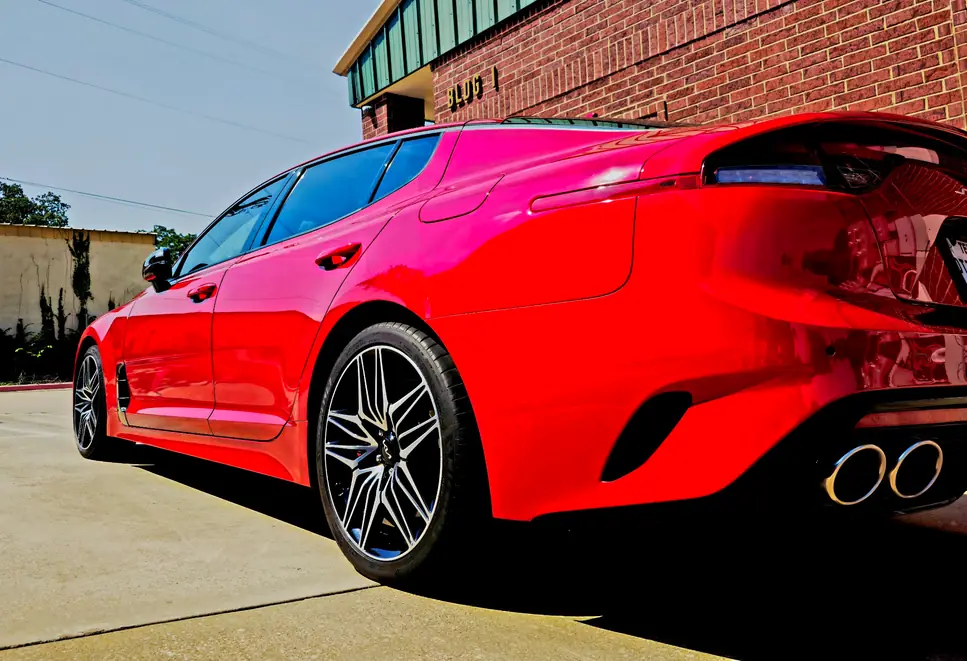
Owners often come in asking which is better, ceramic coating or paint protection film, as if one of them is the winner. They aren't competing products. They do different jobs, and the useful question is which job your car needs done.
What ceramic coating does
A ceramic coating is a liquid that bonds to your clear coat and cures into a hard, slick, clear layer. It is thin. What it adds is chemical and surface protection: resistance to swirl marks from washing, to contaminants like road film and bird droppings, and to the weather. It makes the paint easier to wash, because dirt doesn't grip the surface as hard, and it adds gloss and depth.
We install System X Phantom, FEYNLAB Ultra V3, and REVIVIFY, and we cure them under infrared in a filtered bay. If you want to know more about how correction fits in, we've written about that separately, but the short version is that the paint should be corrected before a coating goes on.
What a coating doesn't do is stop impacts. A stone off the road will chip coated paint the same as bare paint. Coating is not a shield against dents, deep scratches, or chips.
What paint protection film does
Film is a clear, flexible layer applied over the paint in panels cut to fit. Its job is physical. It absorbs the little impacts that chip paint, so the damage lands on the film and not on your clear coat. It goes on the areas that take the beating: the front bumper, the leading edge of the hood, fenders, mirrors, rocker panels, and sometimes the whole car.
We're certified installers for leading brands like XPEL and System X. Film installs rely on careful prep, clean edges, and good heat technique, and our industrial-grade air filtration keeps dust from getting trapped under the film.
Film doesn't give you the slick, glassy feel that a coating does on its own, and it needs care around its edges, with no pressure washer close to a seam. Because it's a physical layer, it makes the most sense on the panels that take the hits.
A side by side look
- Main job: coating protects the surface chemically and makes it easy to clean. Film protects the paint from physical damage.
- Chips from gravel: film helps, coating doesn't.
- Swirl marks and washing wear: a coating is built to resist them.
- Gloss and ease of washing: coating is the stronger of the two.
- Coverage: coating covers the entire car easily. Film is often applied to the high-impact panels and extended from there.
When coating alone makes sense
If your worry is swirl marks, dull paint, and the effort of keeping a car clean, and you aren't a high-mileage highway driver, a coating alone does most of what you want. It suits a garaged car, a lease you're keeping looking fresh, or a daily driver where the main enemy is wash wear and Texas sun.
Our coating levels let you match the package to the paint. Level 1 is for paint that's already in good shape and needs no correction. Levels 2 and 3 add Stage 1 or Stage 2 correction, and include glass. Level 4 adds interior upholstery ceramic protection. The published terms run from one year to seven, depending on the level.
When film alone makes sense
If you drive a lot of highway, own a truck or an SUV that sees road debris, or have a car whose front end you'd hate to see pitted with chips, film on the exposed panels is the more direct answer. It's also worth a look if the paint is new and you want to keep it that way, or if the car is hard to repaint well.
When to do both
Plenty of owners who care about the car end up here. Film goes on the panels that take impacts, and a coating goes over the film and the rest of the paint. You get chip protection where you need it, plus a slick surface everywhere that makes washing easier. Coating the film is a good habit, since it helps keep film clean and makes you less likely to scrub at it.
Doing both in the same visit also keeps the order right: prep and correction, then film, then coating, under filtered air.
A few questions to ask yourself
How many highway miles do you drive? Is the car parked inside or outside? Do you wash it yourself, or does it go through a tunnel? Is your worry how it looks, or what it might cost to repaint a chipped hood? Your answers point to the right mix faster than any brand name will.
We'd rather help you choose the right protection than the most expensive one. The ceramic coating and paint protection film pages go into each service, and you can call the studio on (940) 465-8941 with your year, make, and model for a recommendation.
ECOPAL Mobile Detail, (940) 465-8941
Call (940) 465-8941More articles
Why Paint Correction Comes Before Ceramic Coating
A coating is only as good as the paint underneath it, and sealing in swirl marks is the most expensive mistake an owner can make.
Ceramic Coating Care After You Collect the Car
A ceramic coating makes washing easier, but it doesn't make a car maintenance free, and a few habits decide how it ages.