Why Paint Correction Comes Before Ceramic Coating
A coating is only as good as the paint underneath it, and sealing in swirl marks is the most expensive mistake an owner can make.
October 12, 2026 · 4 min read
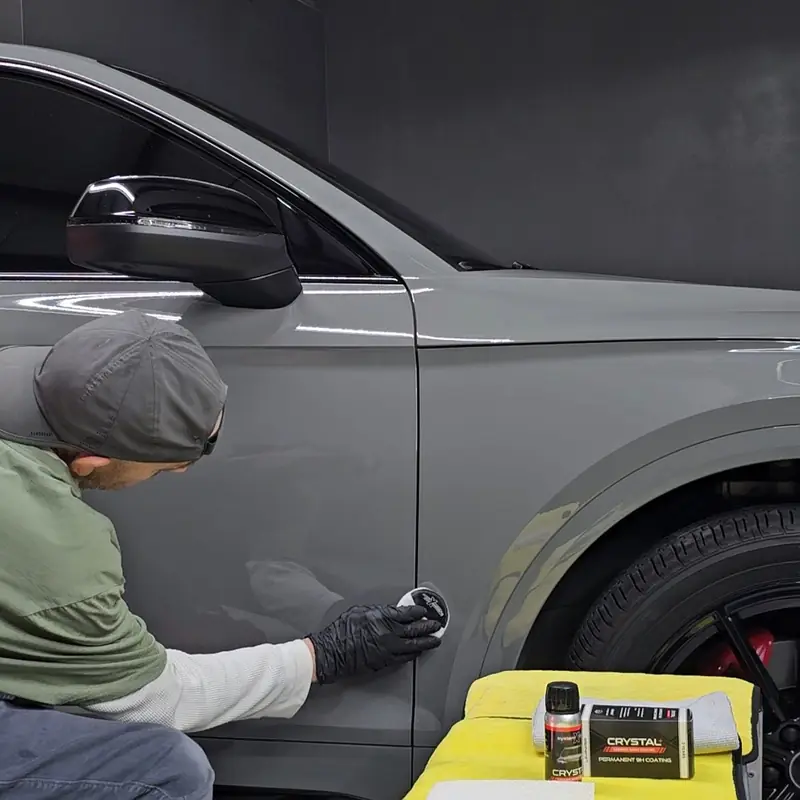
Most people shop for a ceramic coating by looking at the coating. The brand, the term, the gloss in the sample photo. That is a fair place to start, but it skips the part that decides how the finished car looks: the condition of the paint on the day the coating goes on.
A ceramic coating is a clear layer that bonds to your clear coat and stays there. That is the whole point of it. It also means the coating doesn't care what it is bonding to. If your paint has swirl marks, light scratches, water spot etching, or the hazy dullness that builds up over a few years of Texas sun, the coating will bond right over all of it and hold it in place.
What a coating hides and what it doesn't
A fresh coating adds depth and gloss, and that can make paint look better for the first few weeks. But gloss is not the same as correction. Under direct sun or a bright inspection light, swirls still show through, because the coating is clear and the marks are in the paint beneath it. You can't polish them out later without removing the coating first, which is a job nobody wants to pay for twice.
That is why the order matters. Correct the paint, then coat it. Do it the other way around and you have paid to protect a flaw.
What paint correction actually is
Paint correction means machine polishing the clear coat to level out the marks that sit in its surface. A polisher and a series of pads and compounds take off a very thin amount of clear coat, enough to flatten the edges of a scratch until it stops catching the light. It isn't filler, and it isn't a wax that fills the marks for a week.
Correction work gets described in stages. Stage 1 is the lighter pass: it takes out the fine swirls and restores clarity on paint that is in decent shape. Stage 2 is the deeper job, with more cutting and more refining, for paint that has heavier marking from years of automatic washes or poor towel technique. A car doesn't need Stage 2 just because it costs more. The honest answer comes from looking at the paint.
Why the lighting matters as much as the polisher
You can't fix what you can't see. Ordinary shop lights flatten a surface, and a car that looks clean at the curb can look very different under proper inspection lighting. Our Lewisville studio uses hexagon LED inspection lighting, which shows swirls, holograms, and sanding marks that a plain overhead tube hides.
It also works in reverse. After a pass with the polisher, the same lighting tells us whether the marks are gone or just thinner. If they're thinner, we go again. If the clear coat is thin in one spot and another pass would be a risk, we stop and tell you, instead of chasing perfection at the paint's expense.
Dust, filtration, and the cure
Correction leaves the paint bare and very clean, and that is the moment a coating needs a calm, dust-free room. The studio runs industrial-grade air filtration to keep airborne grit off the panels while we work. Once the coating is applied, we use infrared curing, which brings the coating through its cure in a controlled way instead of leaving it to sit in a garage and hope for good weather.
We install System X Phantom, FEYNLAB Ultra V3, and REVIVIFY, and we're certified installers for these products. Each has its own application window and its own quirks, which is one more reason correction and coating happen under the same roof, by the same people.
How this shows up in our coating levels
The four coating levels we offer differ in more than the term of the coating. They differ in how much correction comes with them:
- Level 1 covers the paintwork only, with no paint correction. It suits a new or nearly new car whose paint is already in good shape.
- Level 2 covers paintwork and glass, with a Stage 1 correction first.
- Level 3 covers paintwork and glass, with a Stage 2 correction first.
- Level 4 adds interior upholstery ceramic protection to the Level 3 package, also with Stage 2 correction.
Turnaround follows the work. Level 1 is a one-day job, Levels 2 and 3 take two days, and Level 4 takes three, because correction can't be rushed and a coating shouldn't be applied to paint that was only half finished.
How to tell if your car needs correction first
Park the car in direct sun after a wash and look at the hood and doors from a low angle. Fine circular scratches, a web of lines around door handles, or a cloudy look that won't wash away are all signs the paint has marking worth correcting. A new car from the dealership isn't always clean either, since transport and lot prep leave their own marks, and dealer buffing sometimes covers swirls with fillers that wash off after a few weeks.
If you aren't sure, bring it in or send photos. We would rather tell you Level 1 is plenty for your car than sell you a correction it doesn't need.
Details on every package are on the ceramic coating page, and you can reach the studio at (940) 465-8941 to talk through what your paint needs before anything gets booked.
ECOPAL Mobile Detail, (940) 465-8941
Call (940) 465-8941More articles
Ceramic Coating Care After You Collect the Car
A ceramic coating makes washing easier, but it doesn't make a car maintenance free, and a few habits decide how it ages.
How Long Paint Protection Film Lasts on Texas Roads
There isn't one number for PPF life, but there are clear reasons some films age faster than others, and most of them are about the road and the owner.